Information Resources
A collection of research syntheses, summaries, guides, and fact sheets to support climate-adapted restoration and gardening — created in collaboration with the Northeast Regional Invasive Species & Climate Change (NE RISCC) Network with support from the Northeast Climate Adaptation Science Center (NE CASC).
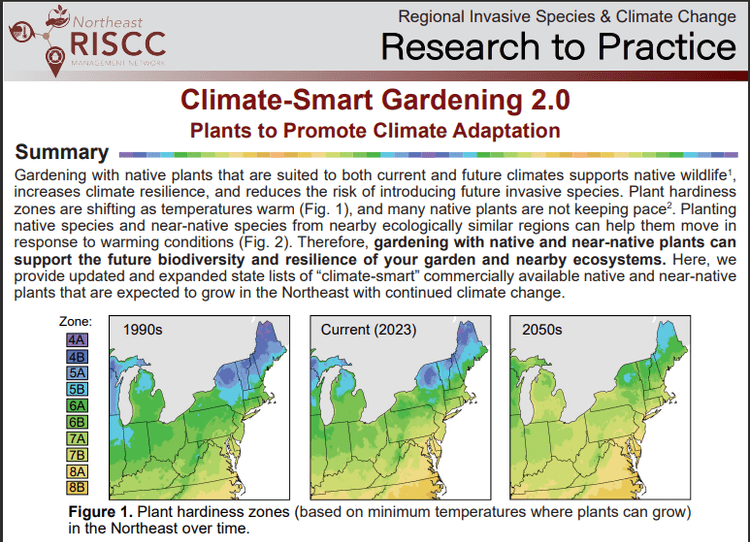
Climate-Smart Gardening 2.0
Gardening with native plants that are suited to both current and future climates supports native wildlife, increases climate resilience, and reduces the risk of introducing future invasive species. Plant hardiness zones are shifting as temperatures warm, and many native plants are not keeping pace. Gardening with native and near-native plants can support the future biodiversity and resilience of your garden and nearby ecosystems. Here, we provide updated and expanded state lists of “climate-smart” commercially available native and near-native plants that are expected to grow in the Northeast with continued climate change.
Download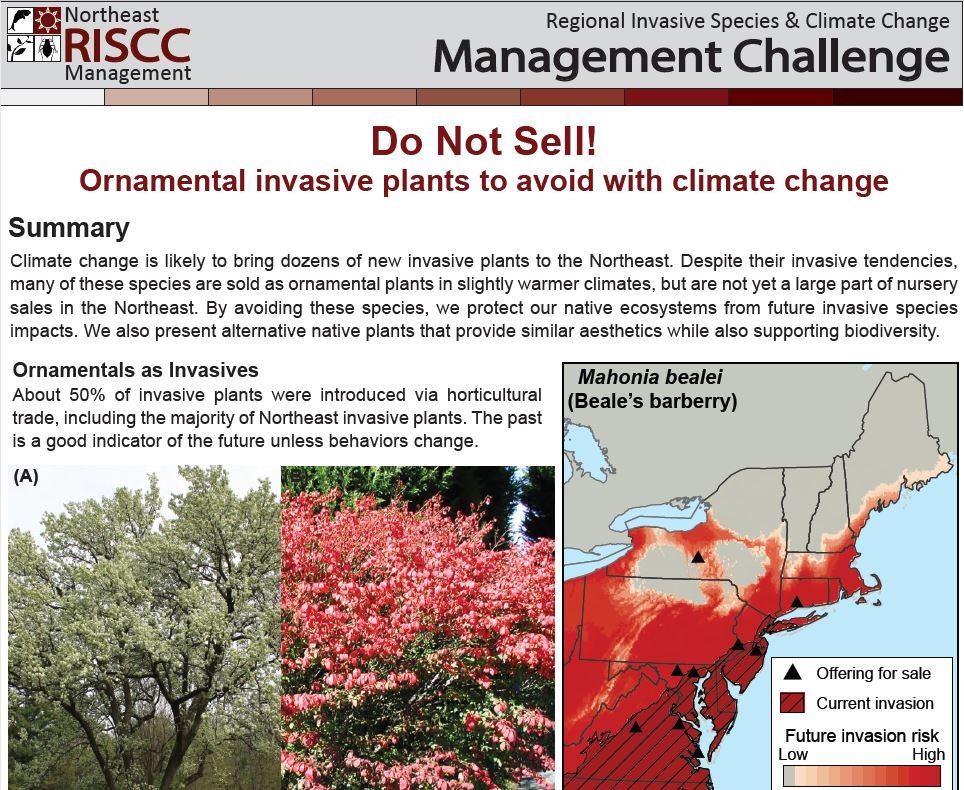
Do Not Sell! Ornamental plants to avoid with climate change
As climate warms, hundreds of new invasive plants are projected to expand into the Northeast (Allen & Bradley 2016). And the majority (61%!) of invasive plants are still available for sale as ornamentals somewhere in the U.S. (Beaury et al. 2021). By helping nursery professionals to identify high-risk invasive plants to avoid selling, we have an opportunity to proactively prevent future invasives. This management challenge highlights a set of high-impact invasive plants that we should avoid buying and selling in the Northeast to reduce the risk of future invasions.
Download
Climate smart gardening
An estimated 80% of ornamental plants for sale are non-native. However, native plants increase biodiversity and reduce risks associated with invasive species, which supports resilient ecosystems in the face of climate change. This resource provides a guide to gardening with native alternatives to common invasive ornamental plants and tips for being a climate-smart gardener.
Download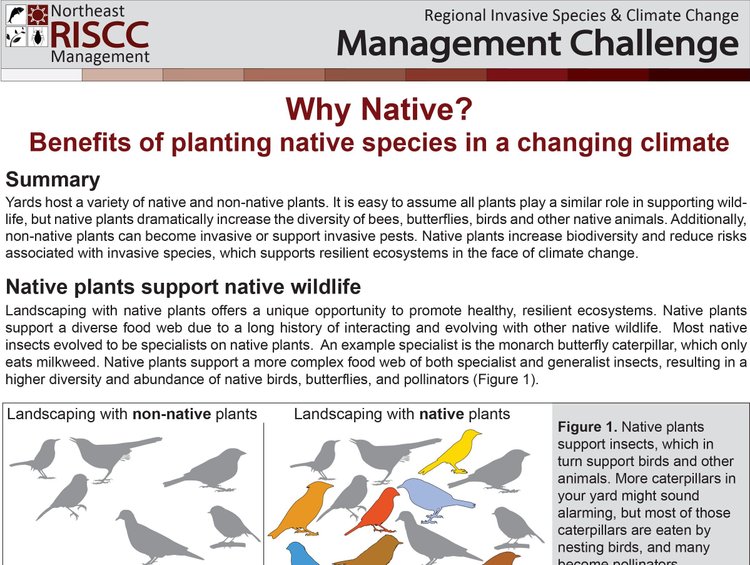
Why Native
Planting non-native ornamental species in gardens gives them a distinct advantage over most natives in the context of climate change. We assist this movement of ornamental plants into regions where they are more able to persist as climate warms, but leave most native plants to try to keep up on their own. To support native ecosystems, we need to encourage friends and colleagues to plant native. Learn more about why native ornamental plants support healthier and more diverse ecosystems.
Download